

Could a computer be your medical doctor one day?
In a way, they already are. Medical doctors have been using technology to diagnose and treat diseases since the invention of the X-ray in 1895. Over time, technology has become integral to the practice of modern medicine. But could a computer eventually become the sole decision-maker for your health, diagnoses, and treatment? I believe the answer is closer to yes than you might imagine, and I will explain why.
In this post, I will briefly discuss what AI (artificial intelligence) is, how it is currently used in healthcare, and its potential future applications. Along the way, I will highlight some of the major benefits and potential harms associated with its use.
So, What is AI?
AI (artificial intelligence) is a computer system with the ability to perform tasks traditionally thought to require human intelligence. For example, AI can make predictions, interpret language, and recognize objects. But how does AI do this? AI works through a learning process called Machine Learning, which operates through a system of ‘neural networks.’ A neural network is a computer algorithm that takes some type of input, processes that input through various preset constructs, and then generates an output response. These neural networks are trained on massive datasets to learn what outputs are appropriate for different inputs.
A simple example of this at work is Google’s search function. You input what you want to search, and it provides you with an output, such as a webpage. This neural algorithm can recognize complex patterns and learn from the data it is trained on, doing so at an incredibly rapid pace. If you think about it, this is very similar to how our human brains work on a microscopic level. Our brains consist of around 100 billion different neurons that form a complex web of inputs and outputs. Our neurons respond to chemical inputs and generate electrical outputs in return. When this happens a few hundred thousand times across billions of neurons, the result is the actions, emotions, and thoughts that define our conscious experience. While AI is not yet able to mimic everything humans can, this revolutionary machine learning process has demonstrated results that would have been thought impossible for a machine just 20 years ago.
It’s interesting to point out that the concept of AI has been around for centuries. There’s documentation dating back to the 17th century of philosophers and mathematicians theorizing about machines performing reasoning. However, the birth of AI as a field of study arose from the Dartmouth Conference in 1956. Shortly after, researchers developed early AI programs that demonstrated the ability to solve a wide variety of mathematical problems.
So, why has AI only recently become so popular and widespread in the 21st century? Much of this has to do with advances in the underlying machine learning algorithms and our current computer systems’ ability to process massive data sets using incredible computational power. Many studies have shown a critical turning point between 2010 – 2020, where AI programs began performing basic reasoning tasks at the level of or superior to humans in many cases. Whether we are aware of it or not, we use AI every single day in the modern era. AI is now implemented in various aspects of our daily lives, including online shopping platforms like Amazon, social media such as Instagram and Facebook, content streaming services like Netflix, and smart devices like Siri and Alexa. These examples highlight how revolutionary AI is becoming and how seamlessly it is integrating into our everyday lives.
How is it being used in Healthcare Now?
AI is currently utilized across every medical specialty, primarily to increase efficiency and speed. Listing all the ways AI is being used would be exhaustive and wouldn’t make for a particularly interesting blog, so I will highlight some of the broader applications. One of the most common uses is transcribing medical documentation from patient conversations directly into the patient’s electronic medical record. This technology helps providers save time on administrative tasks, allowing them to spend more time with their patients. Additionally, AI is used in many clinical settings to answer routine patient questions via online chatbots and even create personalized educational materials based on patients’ medical histories.
Groundbreaking
While responding to questions, creating educational materials, and transcribing documents sounds great, it doesn’t necessarily strike me as a profound breakthrough. However, that is just the tip of the iceberg of what AI is capable of. There are now AI algorithms that can interpret medical information, imaging data such as CT scans, X-rays, and MRIs, and assist providers in making diagnoses and treatment plans.
Take cancer treatment, for example. Diagnosing and treating cancer is incredibly complex, often requiring a unique treatment plan based on each patient’s genetic, laboratory, radiology, and biopsy results. Treatment may differ slightly in the appropriate chemotherapy, radiation, and surgical regimen based on small variations in patient results. AI software has demonstrated the ability to rapidly interpret personalized patient information from these tests, accurately predict a primary cancer, assess the likelihood of treatment success, and determine disease prognosis within seconds. And it does this extremely well. This not only benefits patients but also saves doctors time and assists in making more accurate decisions for each patient.
In the realm of cardiology, AI has been used in various heart imaging techniques (such as echocardiography, cardiac CT and MRI, nuclear scans, and electrocardiograms) to make faster and more accurate diagnoses. It has even shown potential in predicting negative patient outcomes earlier than providers can.
One of the most impressive fields where AI has shown promising results is surgery and surgical robotics. AI can aid in pre-operative planning using 3D anatomic mapping, outcome predictions, and even assist real-time during surgery. There are AI-powered surgical robots, such as the da Vinci Surgical System, that provide real-time mechanical and visual feedback during surgery to assist in creating smaller incision sites, enabling faster recovery times, and minimizing complications.
The Risks
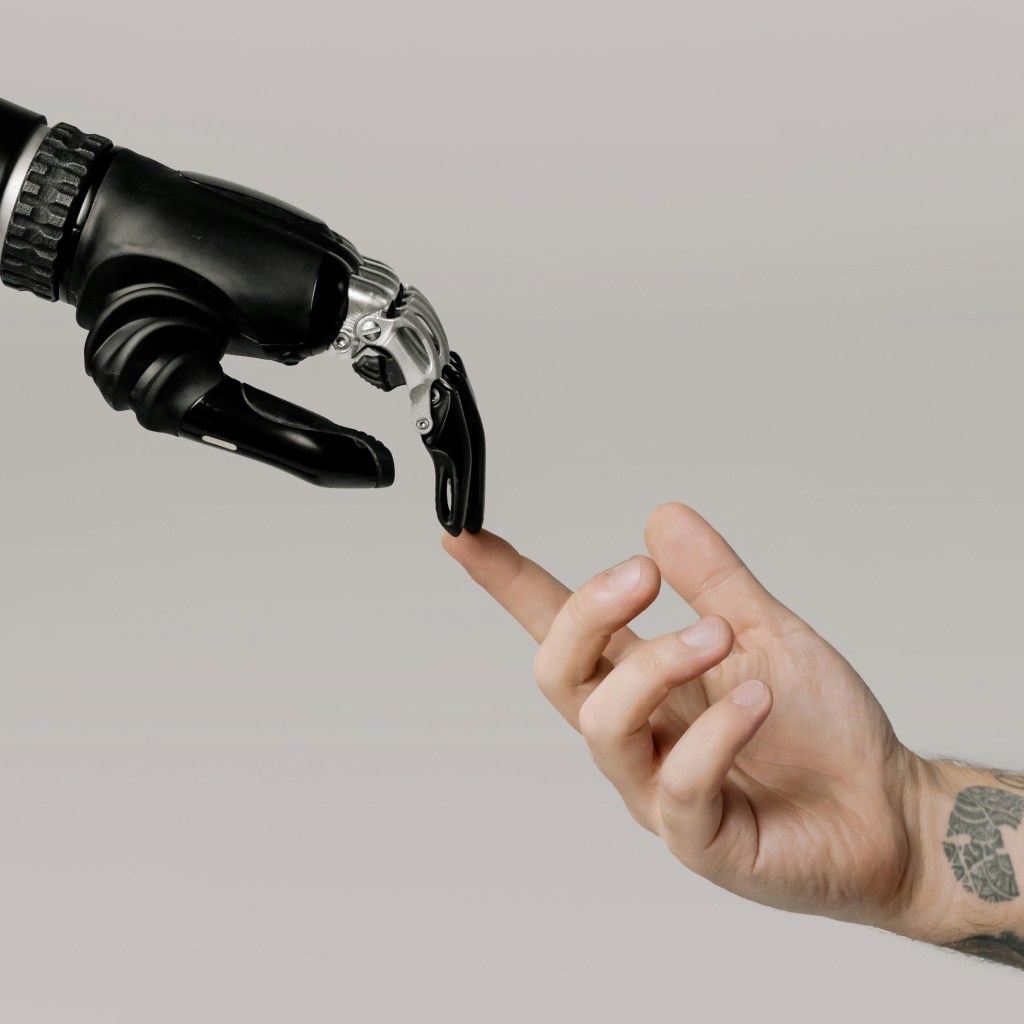
I don’t know how you feel about all this information, but it’s starting to sound very sci-fi to me. Am I seriously saying that AI can perform surgery, interpret medical imaging, and treat cancer? As with everything in the medical field, I believe we should embrace new discoveries with a healthy dose of optimistic skepticism. While AI certainly offers massive promise in healthcare, it also introduces significant risks. There are numerous concerns and challenges to adopting AI within the medical field, and its widespread use is limited by these sizeable obstacles. In this next section, I will discuss some of the primary challenges and risks associated with fully adopting AI into the healthcare space.

Ethics and Safety
There is an entire field in medicine called “Medical Ethics” dedicated to examining the moral and ethical principles of medical practice. This field has helped develop regulations that ensure patient care is ethical. For example, medical providers cannot force patients to undergo treatment they do not want. This principle, known as patient autonomy, allows patients to refuse medical treatment. Forcing medical treatment would be unethical, and because of the influence of medical ethics on regulations, it is illegal to do so.
Medical ethics also governs devices and technology in healthcare through a subfield known as biomechanical ethics. However, our current ethical regulatory system is not fully prepared to regulate AI technology. Historically, devices and technology have been viewed as machines that perform one task exactly the same way every time. For example, a dialysis machine performs the same function consistently every time. Our regulations are designed to ensure that such machines operate reliably and safely to protect patients.
The inherent nature of AI, however, is that it can perform human-like reasoning and make different decisions based on various patient factors. This flexibility and variability present unique challenges for safety and ethical regulation. Regulating AI technology will require a major overhaul of the processes that determine what is safe for patients and how these technologies should be monitored.
AI IS A LIAR
There is a phenomenon within AI termed “confabulation,” which refers to when AI presents information that sounds credible but is, in fact, completely fabricated or false. Since AI machine learning is based on how the human brain learns—one of the most complex systems known to man—understanding how and why confabulations occur is an incredibly challenging task. We currently believe this is caused by several factors. AI learns through pattern recognition within the datasets it is given. This means that the system may occasionally make errors in identifying patterns, leading to incorrect results. Confabulation could also result from inaccurate or biased training data. It might arise from ambiguous input or when the user tries to make the system perform tasks beyond its training.
The frequency and impact of confabulation in healthcare varies widely and depends on several factors, and more research is needed to fully answer these questions. Nevertheless, this is a major risk when it comes to adopting AI in healthcare, a field that frequently makes life-or-death decisions. Even small amounts of confabulation could potentially lead to disastrous outcomes. Each AI system requires high-quality data for training, and developers must be transparent in disclosing how the model makes its decisions. If we are to see AI adopted in healthcare, rigorous policies must be employed to oversee its use and ensure it continues to positively impact patient care.
BIAS
AI systems have been shown to be capable of developing biases, which presents a major challenge when considering their adoption into healthcare. A real-world example of this is facial recognition technology. Studies have shown that facial recognition systems are significantly less accurate for people with darker skin tones, demonstrating bias and unfairness inherent within the system. Early AI language models designed for conversation also showed the development of stereotypes and racial biases, such as associating men with careers and women as caretakers.
An example of AI bias in medicine could be demonstrated through the detection of skin cancer. An AI system might be developed to analyze images of skin lesions and determine whether a lesion is cancerous. However, the majority of data on skin cancer has been studied on Caucasian males. Would this AI system be accurate when employed on individuals with different skin tones? Would the system be able to determine when it could or could not make an accurate decision, or recognize the limitations and biases of its training? These are all issues currently undergoing further research and development to improve.
To adopt the widespread use of AI diagnostic or treatment systems, we must create equity within our research to include individuals of all backgrounds to train these systems on. New ethical frameworks and regulatory procedures must be put into place to ensure fairness and safety in patient treatment.
Job Displacement
In an AI-driven healthcare system, it is very possible that a large majority of the workforce could be replaced by AI systems. Areas such as medical billing, coding, radiology, technicians, transcriptionists, and support and ancillary services could all potentially be automated. This is a concern across multiple industries, not just healthcare. How would you feel if you were competing with a coworker who could do your job 24/7, without tiring, and for a lower cost?
While administrative tasks may be displaced, areas in medicine involving direct patient care are less likely to experience full displacement. Roles that require human empathy, hands-on patient care, and complex decision-making—such as doctors, surgeons, and nurses—are less likely to be fully automated.
Although this sounds like a daunting possibility, there are strategies proposed to mitigate job displacement. AI itself will create new jobs involved in managing, overseeing, and providing IT support for these systems. Training programs can be developed to help healthcare workers transition into roles less likely to be automated or to work alongside AI systems.
Looking Forward
Medicine should not be a static field. If we continued to practice the widely accepted treatments of 100 years ago, we would be living in a barbaric medical system. It was not long ago that lobotomies, bloodletting, and even drilling holes into the skull to treat common ailments were standard practice. As late as the 1950s, it was common to deliberately infect patients with malaria to treat syphilis, believing the high fevers induced by the parasitic disease would kill the syphilis bacteria. This practice caused numerous deaths and harmed countless patients. Medical advancements have made death from syphilis rare, as it is now completely treatable with antibiotics.
Medicine necessitates continuous advancement to improve outcomes and the safety of the population as a whole. The practices in place today will likely look vastly different 50 years from now. I believe AI is the next step in this process. AI is not a far-off idea; it is here and is already changing how we practice medicine. I strongly believe AI will continue to shape the way we practice medicine as the system advances. AI is not here to replace doctors, at least not in the foreseeable future, but it is a powerful tool that has shown to create better outcomes for patients across practically every field of care.
Due to AI’s widespread use in various areas of technology, billions of dollars are being invested by varying entities and corporations to continue its research and development. AI is progressing at lightning speed. While the ability of a machine to recognize a picture of a cow was groundbreaking 30 years ago, current AI systems like ChatGPT can now recognize an image of a cow, generate a creative new image of one, educate you on how to raise a cow, and write a creative poem about cows—all within the blink of an eye.
My hope is that the medical field continues to embrace AI with a healthy dose of optimistic skepticism, always prioritizing the research and objective data. Every new treatment, invention, or discovery comes with inherent risks, and we need to continue efforts to improve and mitigate these risks. We have many challenges to overcome to implement AI into healthcare nationally, but I believe that when we do, we will have a better medical system for patients.

More Information
For more information on AI in Healthcare:


 A Resident's Review
Leave a comment